


Empowering Individuals
To Fight UPI Scams


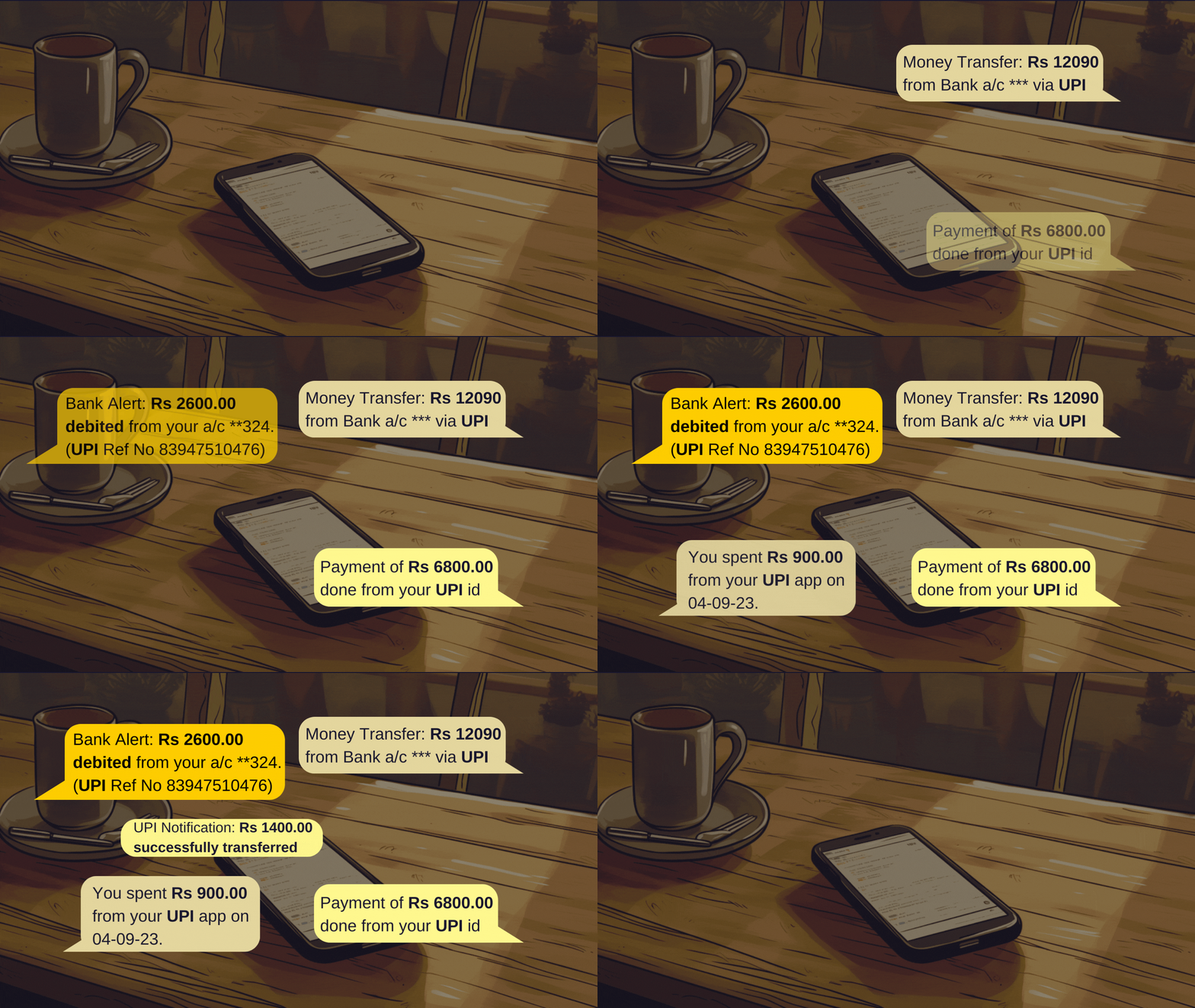

The Many Faces of UPI Scams
Fake Customer Care
Carefully read this post shared by a user on Reddit
-
The user's wife wanted to contact a hospital, and since she was in a hurry, she Googled for the hospital's contact details and called the first number that showed up.
-
The scammer shared the booking link on WhatsApp and offered to help fill out the form.
-
The user went through the link and found it suspicious. After giving all the details, when they saw that the UPI interface looked different from NPCI, they decided not to proceed with the transaction.
"This kind of scam is the most common. Users search for customer care numbers for all major services through Google. So, they [scammers] poison the search results. And as soon as you connect with that fake customer care operator, or you can say the scammer, they try to get hold of your UPI. For that, they will ask you to install third-party applications like screen-sharing ones or SMS forwarders. As soon as you install these applications, the scammers gain control of your UPI."
.jpeg)
.jpeg)
-
Contact the customer care only through the contact details provided at the official website of the organisation.
-
The customer care executives can't ask customers to install any third-party application to provide services
-
Even if you install any third-party application, do not permit them to access to your contacts, gallery, camera, microphone, UPI payment apps, finance & investment apps, etc
-
And the most basic one – do not share your PINs or OTPs with anyone (including any customer care executive)

Sent Money 'By Mistake'
This is one of the most popular UPI scams.
The scammers transfer a small amount to the victim's account. Then, they contact the victim, claiming that the money was sent mistakenly. At this point, the scammers send a link and ask the victim to use it for payment.
However, when the victim clicks on the link, the scammers take control of the device and steal money from the victim's UPI account.
Below post recounts one of the countless cases of this type of scam.


Electricity bill scam
Imagine, suddenly receiving a warning message from your electricity provider! How will you react?
Electricity is one of the most common utility service and many pay their electricity bills via the convenience of their UPI apps. So it has become another avenue for scammers to target.
The victim receives a message from an unknown number that says that their electricity bill has not been paid and the electricity department will discontinue the services. When victims contact the number given, they are either asked to download some third-party applications or asked to share personal information. This eventually leads to people losing their money.
Below post recounts one of the countless cases of this type of scam.


-
Do not entertain an unknown number posing on behalf of an organisation or authority. Verify the claims made by such people from official channels. (In the above example – from the electricity provider)
-
Do not install any third-party application to make any digital payments.
-
Always check the authenticity of the developer of the app on the app store before downloading any unpopular app.

Fake websites and apps of popular platforms
Did you know that most of the popular websites have a fake replica?
The unauthenticated versions of popular websites are developed by scammers to get their hands on UPI or card details of people. This is true for mobile applications, too. The fake website will have a similar-looking URL to that of the original one.
See these fake banking apps on the Google Play Store.

They steal data by asking users to fill forms that require sensitive information such as log-in credentials and credit card details.
Delhi Police had earlier warned users of a fake ICICI Bank webpage.

Did you notice the difference in their URLs?
Recently, IRCTC sent an email warning people of a malicious Android application hosted on a phishing website that was being shared on social media platforms. Scammers were impersonating government officials and were tricking people into revealing their sensitive information.

"There were so many people who were scammed with this thing called Pink WhatsApp, Blue WhatsApp, GB WhatsApp. Why? There is only one green color WhatsApp which is created by the Meta company...There is no second application on any PlayStore or any application store."


Now that you have learnt how to identify scams, do you think you are ready to beat the scams? Test your Scamguard abilities through this..
Scam or Not Quiz?
ONE


what to do after getting scammed

Contact Your Bank: Immediately inform your bank about the scam. They can freeze your account or take necessary actions to prevent further transactions.

.File a Police Complaint: Visit your local police station and file a complaint about the scam. Provide all relevant details including the UPI transaction ID, date, time, and any other information you have.

Report to UPI App: Inform the UPI app provider (like Google Pay, PhonePe, Paytm, etc.) about the scam through their customer support. They may be able to track the transaction and provide assistance.

Dispute the Transaction: If you paid using UPI through a credit or debit card, you can dispute the transaction with your card provider. They may be able to reverse the payment or provide you with a refund.

FEEDBACK
Team
Dedication. Expertise. Passion.
This is your Team section. It's a great place to introduce your team and talk about what makes it special, such as your culture or work philosophy. Don't be afraid to illustrate personality and character to help users connect with your team.


